
Michael Mikolay
August 13, 2026

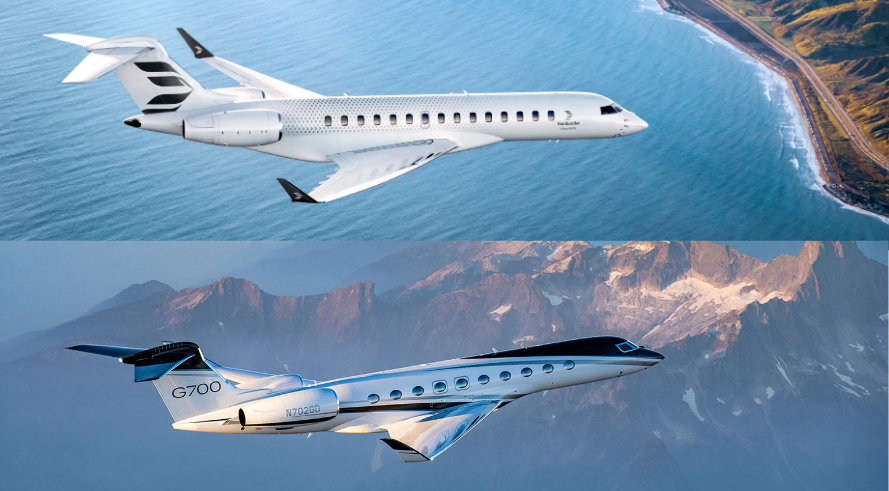
Most aircraft buyers comparing a Bombardier Global 8000 or Gulfstream G700 aren't starting from scratch. They often have a preference.
Maybe they've spent years flying one manufacturer's aircraft and simply know what to expect. Perhaps their flight department has years of experience operating, maintaining and supporting that same platform.
That's why what appears to be a choice between two aircraft is often a question of whether that initial preference still holds up once we examine the mission, the operation and the ownership plan.
Having represented clients purchasing both the Bombardier Global 8000 and the Gulfstream G700, I've found that buying a business jet at this level rarely comes down to a single specification or performance metric.
Range, cabin size, speed, runway performance, support, delivery timing, residual value and operating profile all factor into the decision. It is also shaped by what the aircraft owner and flight department already know, trust and prefer.
By the time someone is seriously evaluating these two aircraft, capability usually isn't the question. Both deliver the ultra-long-range performance buyers expect.
At that point, I want to know whether the aircraft they're drawn to fits the way they'll own and operate it.
Buyers think they're comparing two aircraft. I'm trying to understand whether the one they're leaning toward fits their mission, their operation and the way they'll use it over time.
I've found that principals and flight departments evaluate the same aircraft differently.
A principal who's spent years flying on Bombardier's Global platform often comes back to the cabin. They know how the space works for them on a long flight, and that familiarity has real value.
A flight department may look at the same decision differently.
For example, if an operation already flies Gulfstream aircraft, there are practical advantages to staying with a platform. The crew knows it, the maintenance team understands it and the department is accustomed to supporting it.
That familiarity can extend to training, maintenance processes, support relationships and the broader fleet. Those factors may not drive the owner’s decision, but they shape the daily experience of the people responsible for operating the aircraft.
Neither perspective is wrong. They are looking at different parts of the ownership experience.
I've had clients begin this process convinced they wanted one aircraft and ultimately purchase the other.
The aircraft didn't change. The conversation did.
Once we worked through the mission, the operation and the long-term ownership plan, the decision often changed.
That's when the discussion moves beyond the spec sheet. Is the aircraft replacing another aircraft or joining an existing fleet? Who will actually spend the most time on board? How important is platform commonality? What will matter most five or ten years from now, once the excitement of delivery has passed?
A comparison chart won't answer those questions, yet they often decide which aircraft makes more sense.
The Bombardier Global 8000 and Gulfstream G700 compete for the same buyers, but they don't always win those buyers for the same reasons.
I don't spend much time telling clients which aircraft is objectively better because that is rarely the question that matters.
My work is helping buyers move past the spec sheet and choose the aircraft that will still make sense years after delivery.
The spec sheet starts the conversation, yet it rarely finishes it.